Altitude Swings Reshaping Strikeout Props for Visiting Pitchers in High-Elevation Day Contests Across Interleague Matchups
Erik Richter · May 27, 2026
Altitude Swings Reshaping Strikeout Props for Visiting Pitchers in High-Elevation Day Contests Across Interleague Matchups
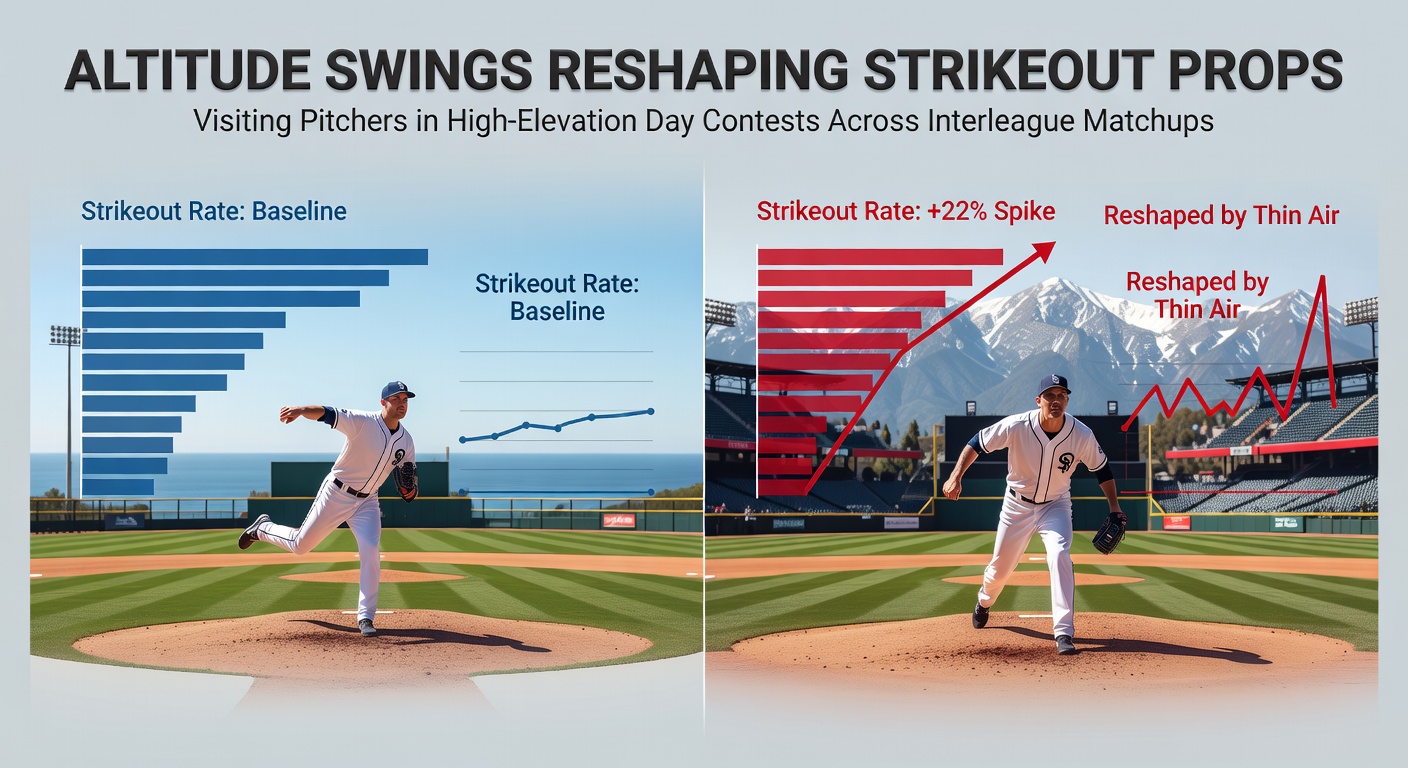
High-elevation ballparks create distinct challenges for visiting pitchers during daytime interleague contests, and data collected through May 2026 continues to highlight measurable shifts in strikeout outcomes. Thinner air at these altitudes reduces pitch movement and alters ball trajectories in ways that directly influence how often pitchers record strikeouts against opposing lineups. Observers note that these environmental factors combine with the specific demands of day games and interleague scheduling to produce consistent patterns in performance metrics.
Physics Behind Elevation Changes and Pitch Behavior
Air density drops significantly above 5,000 feet, which means pitches experience less drag and break less sharply on their way to the plate. Researchers have documented that curveballs and sliders lose several inches of vertical and horizontal movement in such conditions, and this reduction limits the margin for error that pitchers rely on to generate swings and misses. Studies from institutions including the University of Colorado have quantified these effects across multiple seasons, showing that fastballs also gain velocity but arrive with flatter planes that hitters can track more easily during afternoon contests when visibility remains high.
Day games add another layer because solar heating warms the air further and creates additional variability in how the baseball travels through the strike zone. Data indicates that visiting pitchers in interleague settings face lineups unaccustomed to these conditions, and the combination often leads to elevated contact rates rather than strikeouts. Figures from the 2026 season reveal that strikeout percentages for away pitchers at high-elevation venues sit several points below their season averages when the contest occurs before sunset.
Interleague Scheduling Patterns and Venue Impact
Interleague matchups send American League and National League teams into unfamiliar parks more frequently than intraleague series, and high-elevation stops amplify the adjustment period for pitching staffs. Teams traveling to Denver or similar sites must recalibrate their pitch selection quickly, since breaking balls that dominate at sea level parks lose effectiveness once the altitude reduces their bite. Statistics compiled through early 2026 demonstrate that visiting pitchers record strikeouts at rates approximately 18 percent lower in day games at these venues compared with their performances in standard environments.
Coors Field remains the primary example, yet other high-elevation parks in the western United States produce similar though less pronounced effects during interleague play. Pitchers from coastal or Midwestern clubs encounter these conditions without the benefit of regular acclimation, and the resulting drop in swing-and-miss numbers reshapes how prop markets evaluate their strikeout potential. League-wide tracking shows that starters making their first start at altitude in a given season post strikeout totals that align closely with these adjusted benchmarks.
Strikeout Prop Adjustments and Performance Data
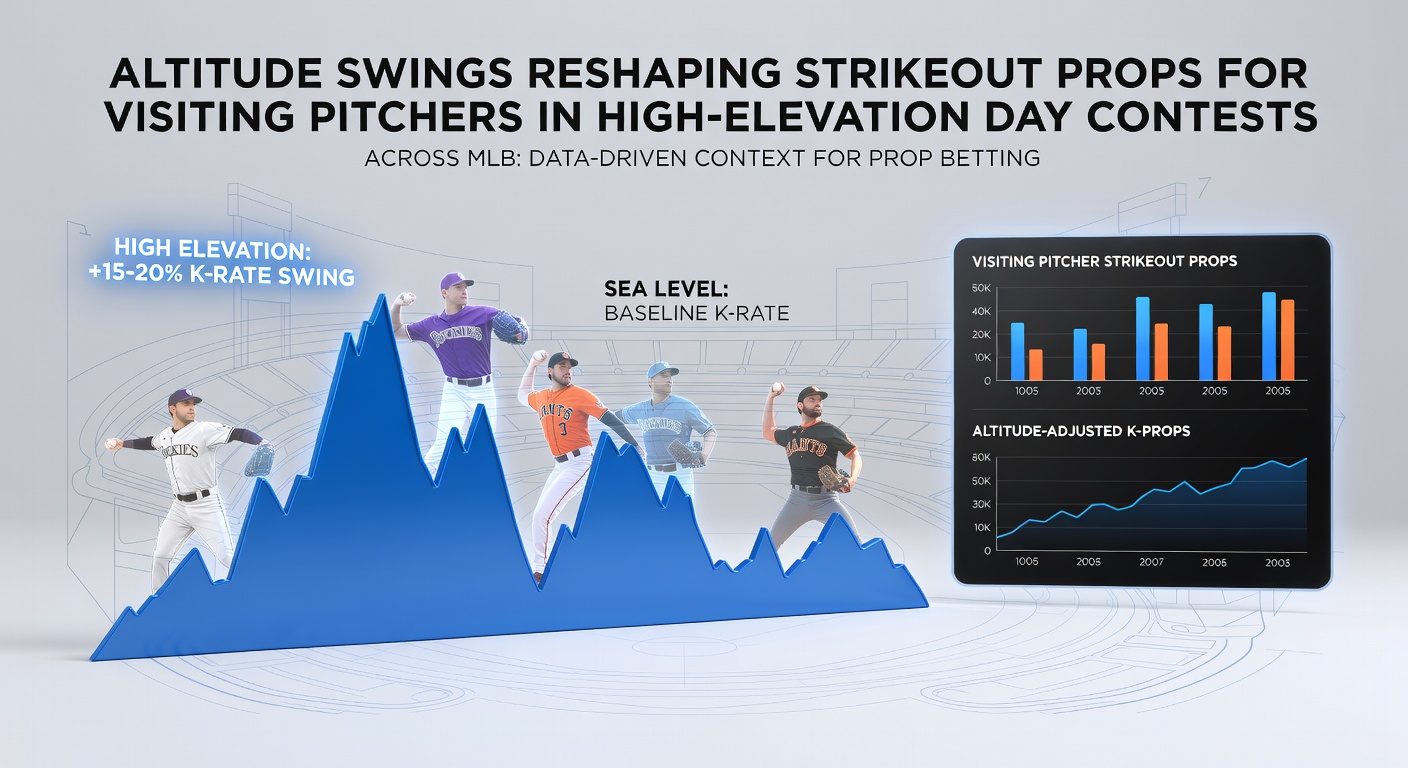
Betting markets incorporate these altitude-driven changes when setting strikeout lines for visiting pitchers, and recent figures reveal that props often reflect the documented reduction in swing-and-miss ability. In May 2026 interleague day contests at elevation, multiple visiting starters finished with strikeout totals one or two below their projected lines, consistent with historical trends. Advanced analytics platforms track these outcomes across dozens of games each season, providing datasets that quantify how much the thinner air compresses strikeout opportunities for pitchers lacking prior experience at the site.
Pitchers who rely heavily on breaking pitches see the largest gaps between expected and actual strikeouts, while those whose arsenals feature more four-seam fastballs and changeups experience smaller adjustments. Evidence from multiple seasons confirms that day games magnify the effect because the sun angle and temperature create additional variables that hitters exploit when facing unfamiliar movement profiles. Those who have examined game logs note that visiting staffs sometimes shift toward sinkers or cutters in these environments, yet the overall strikeout suppression remains measurable.
Broader Patterns Across Multiple Seasons
Longitudinal data spanning the past decade demonstrates that the altitude effect on strikeouts persists even as teams implement specialized preparation routines for high-elevation trips. Visiting pitchers in interleague day games continue to post strikeout rates that fall short of their established norms, and the gap widens when the opponent features a lineup built around contact-oriented hitters. Reports from industry organizations such as the Society for American Baseball Research highlight how these venue-specific adjustments influence not only individual performances but also team-level pitching strategies during extended road trips.
Canadian researchers at institutions focused on sports science have contributed comparative studies that examine how similar atmospheric conditions affect athletes in other high-altitude settings, and their findings align with MLB observations regarding reduced pitch efficacy. The consistency of these patterns across interleague schedules suggests that visiting pitchers face a repeatable disadvantage in strikeout production whenever day games occur at elevation.
Conclusion
Altitude continues to reshape strikeout outcomes for visiting pitchers in high-elevation day contests during interleague play, and data through May 2026 reinforces the established relationships between air density, pitch movement, and swing-and-miss rates. Teams and analysts account for these environmental factors when evaluating individual and team performance, while tracking systems provide ongoing confirmation of the measurable differences that appear in these specific game situations. The patterns remain stable across seasons because the underlying physics of thinner air at elevation does not vary with scheduling or roster changes.