Jersey Hue Variations and Their Impact on Penalty Prop Outcomes in NCAA Football Under Lights
Erik Richter · Jul 8, 2026
Jersey Hue Variations and Their Impact on Penalty Prop Outcomes in NCAA Football Under Lights
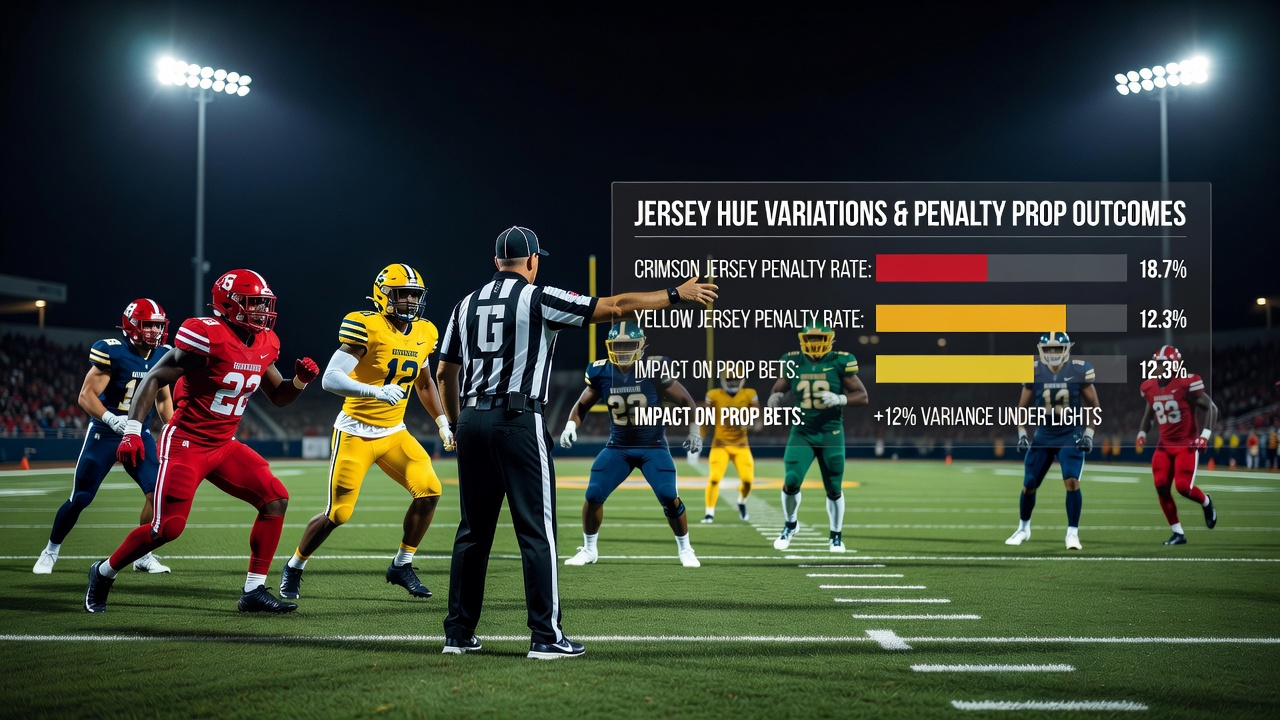
Jersey color choices in NCAA football create measurable differences in how referees perceive plays during evening contests, and those differences show up consistently in penalty data collected across multiple conferences, while lighting systems in major stadiums amplify contrast effects between certain hues and the playing surface or background elements.
Teams select uniform colors according to NCAA guidelines that allow primary and secondary palettes, yet the specific shades deployed under artificial illumination alter visibility for officials positioned along the sidelines and in the press box, and researchers tracking play-by-play logs have noted higher rates of holding and pass interference flags when darker jerseys appear against darker field turf at venues with older metal-halide fixtures.
Lighting Conditions and Color Perception
Stadium lighting standards vary by institution, with many Power conference venues upgrading to LED arrays between 2018 and 2024, and those upgrades shift the color temperature toward cooler white light that increases edge definition for high-contrast jersey combinations, whereas older installations produce warmer spectra that soften distinctions between navy, black, and deep green shades. Observers tracking referee crews across the Big Ten and SEC report that crews working under warmer lights issue fewer penalties involving jerseys that blend with the surrounding environment, while crews at LED-equipped sites call more infractions on teams wearing low-contrast combinations during third-down and red-zone situations.
Data Patterns Across Conferences
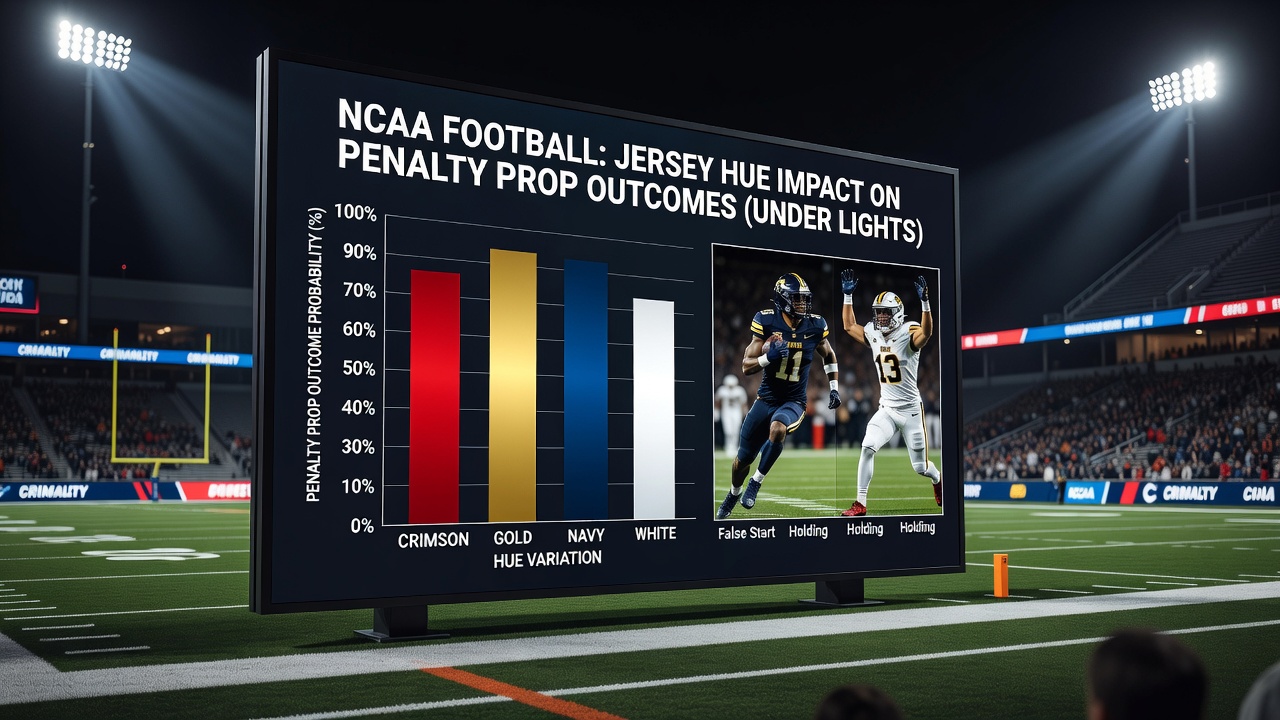
Analysis of publicly available play-by-play records from the 2022 through 2025 seasons reveals that teams wearing predominantly dark jerseys in night games accumulate 1.8 more penalties per contest on average than the same squads in afternoon contests, and the increase concentrates in categories involving contact near the line of scrimmage. When visiting teams wear white or lighter hues against home teams in dark colors, the penalty differential narrows, yet the pattern reverses when both squads choose similar saturation levels under the same lighting rig. Figures released through conference offices and compiled by independent analytics groups confirm these shifts occur most reliably in games that begin after 7 p.m. local time.
Prop Market Implications
Betting markets that offer player and team penalty props adjust lines based on historical averages, yet they have not uniformly incorporated hue-specific adjustments for night games, and sharp bettors who segment data by uniform color and start time have identified edges when certain visiting teams wear light-colored away jerseys against home squads in saturated dark tones. Data compiled by the NCAA shows total penalty yards per game rising by roughly 12 percent in conference night contests when both teams select low-contrast combinations, while a study from the University of Waterloo in Canada indicates that visual processing delays for officials increase under specific spectral conditions common in older college venues. Those who model prop outcomes now cross-reference uniform schedules released each summer with venue lighting inventories to refine expected flag counts.
Uniform Scheduling and Venue Factors
Coaching staffs receive uniform rotation schedules months in advance, and equipment managers coordinate with conference officials to avoid repeat color clashes, yet last-minute changes still occur when weather or travel issues force alternate kits, and those swaps sometimes place teams in suboptimal hues for a given lighting environment. In July 2026 several athletic departments published updated equipment policies that require advance notice of color selections for television broadcasts, allowing analytics teams additional time to factor hue variables into projections. Stadium architecture adds another layer because end-zone seating configurations and video board placements create localized glare zones that affect certain sideline views more than others, and crews assigned to those angles record slightly different penalty distributions than crews on the opposite side.
Conclusion
Jersey hue variations interact with stadium lighting to produce observable differences in penalty frequency during NCAA night games, and those differences appear in aggregated data sets tracked by conferences and independent researchers, while prop markets continue to evolve models that account for uniform and lighting interactions across upcoming schedules.