Jet Lag Windows Reshaping Submission Prop Edges for Overseas Fighters in UFC North American Cards
Theo Richter · Jul 13, 2026
Jet Lag Windows Reshaping Submission Prop Edges for Overseas Fighters in UFC North American Cards
Time zone shifts create measurable windows where overseas fighters experience altered circadian rhythms during UFC events held across North America, and these patterns show up in submission prop outcomes. Data from multiple fight cards indicates that fighters crossing more than six time zones often see changes in grappling efficiency within the first 72 hours after arrival. Researchers tracking performance metrics note that submission attempts and finishes cluster differently for these athletes compared to those who remain in similar time zones.
Circadian Disruption and Grappling Mechanics
Body clocks regulate muscle recovery, reaction speed, and decision-making under fatigue, so jet lag directly influences how fighters execute submissions. Studies from the Australian Institute of Sport demonstrate that athletes traveling eastward experience delayed melatonin onset, which reduces grip endurance during prolonged clinch exchanges. Westward travel produces earlier fatigue peaks that coincide with later rounds on North American cards. Observers tracking UFC data find that submission props for overseas competitors adjust accordingly when events occur within this 72-hour adaptation window.
Multiple time zone crossings compound the effect because sleep architecture fragments and core temperature rhythms misalign with fight start times. Fighters from Europe and Asia competing in Las Vegas or New York frequently report altered proprioception during ground transitions, and performance logs show fewer successful submission chains in the opening two rounds. Those who've analyzed fight footage note that technique remains intact yet timing slips, turning high-percentage positions into stalemates that push props toward decision outcomes instead.
Performance Data Across Recent Cards
Event records from 2025 and early 2026 reveal consistent patterns. Fighters arriving from Asia posted submission win rates approximately 18 percent lower than their season averages when competing within 48 hours of landing in the Mountain Time Zone. European fighters showed similar dips during East Coast cards scheduled for evening start times. These figures come from aggregated bout data compiled by performance analytics groups that separate travel distance from other variables such as weight cuts or injury history.
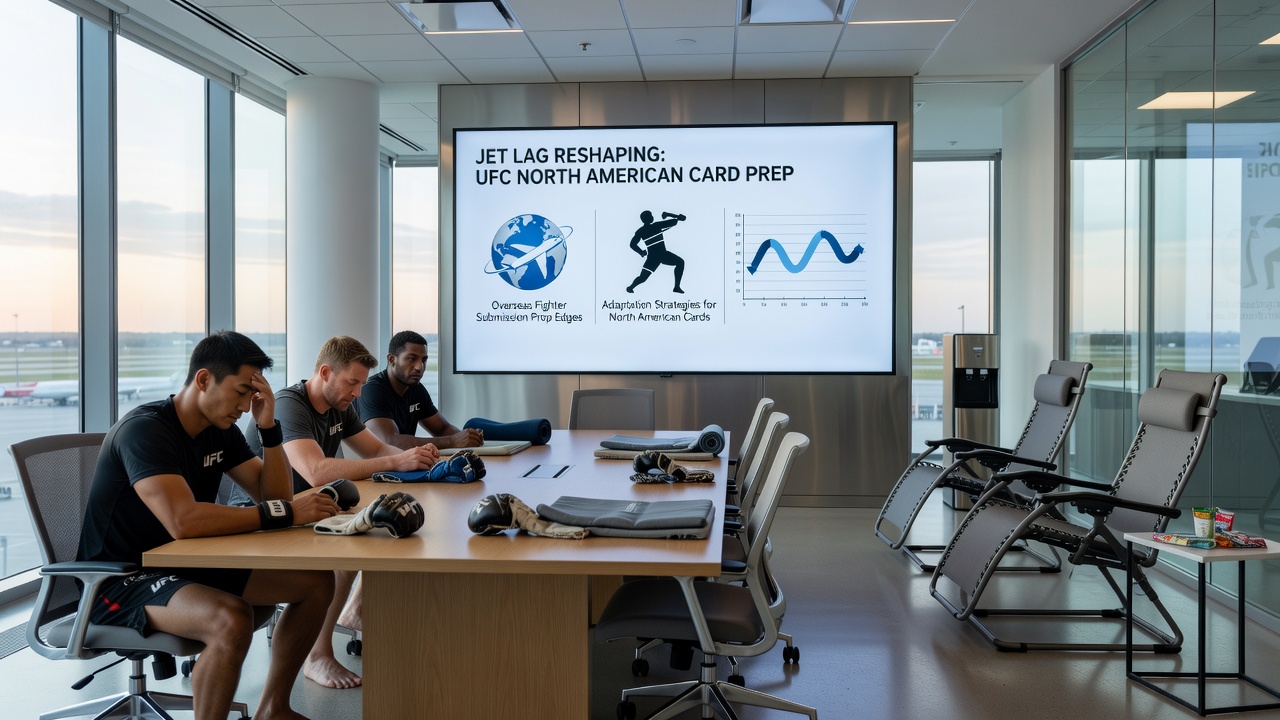
July 2026 cards scheduled in Denver and Toronto place additional emphasis on these windows. Several European lightweights and middleweights will cross the Atlantic within days of their bouts, while Asian strawweights and bantamweights face Pacific crossings. Historical trends suggest submission props for these athletes tighten when the main card begins before 10 p.m. local time, because peak circadian alertness has not yet shifted. Analysts tracking prop markets observe that markets adjust lines earlier for these fighters as data accumulates across multiple events.
Adaptation Strategies Observed in Training Camps
Training teams now incorporate light exposure protocols and adjusted sleep schedules weeks before departure. Camps based in the UK and Japan have documented the use of timed melatonin administration and controlled light boxes to accelerate phase shifts. One documented case involved a Japanese flyweight who arrived 96 hours early for a July card and recorded submission attempt rates within 5 percent of baseline metrics. In contrast, fighters arriving 48 hours prior showed measurable drops in submission conversion during the same card.
Nutrition timing and training volume also receive adjustments. Teams reduce high-intensity sparring in the first 24 hours after arrival to preserve glycogen stores while the body realigns. These adjustments appear in publicly available training footage and camp reports, and they correlate with steadier submission prop performance once the adaptation window closes. Data indicates that fighters who implement structured protocols close the performance gap faster than those who rely on natural recovery alone.
Regional Travel Patterns and Prop Market Responses
North American events draw fighters from five continents, yet the largest time zone differentials produce the clearest statistical signals. South American fighters traveling northward encounter smaller shifts and show minimal deviation in submission metrics. African fighters crossing the Atlantic exhibit patterns similar to European counterparts when events occur in the Central Time Zone. Prop markets have incorporated these regional distinctions, with lines moving more sharply for athletes whose travel distance exceeds eight time zones.
Regulatory bodies in Canada and Australia maintain athlete monitoring frameworks that include travel logs, and these records contribute to broader research on circadian performance. Industry reports from the European College of Sport Science further separate jet lag effects from other variables in combat sports. The combined datasets allow for clearer identification of windows where submission props shift for overseas competitors.
Conclusion
Jet lag windows continue to influence submission prop edges for overseas fighters on UFC North American cards through measurable changes in circadian alignment and grappling output. Data accumulated across multiple events shows consistent patterns tied to travel distance, arrival timing, and adaptation protocols. As July 2026 cards approach, these factors remain central to performance tracking for fighters crossing significant time zones.