Midseason Trade Ripple Effects on NBA Three-Point Prop Accuracies for Newly Integrated Rotation Players
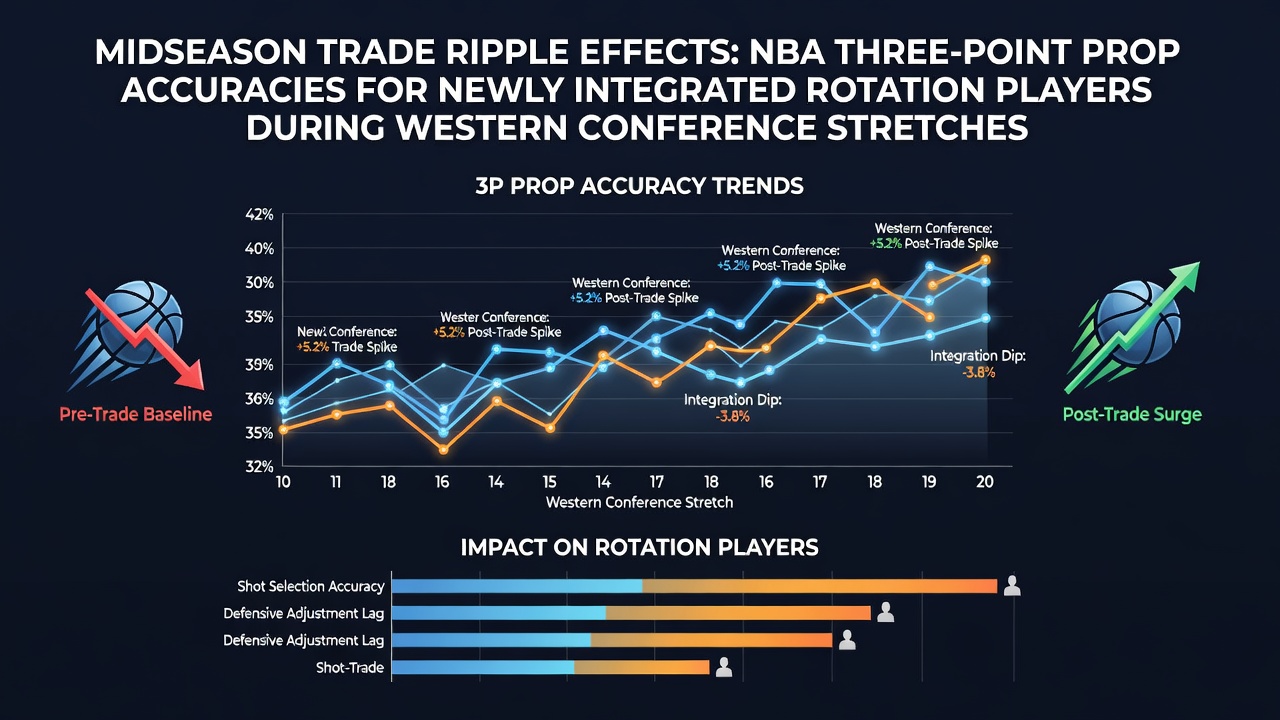
League tracking data from the 2025-26 season shows that midseason trades often shift three-point prop outcomes for players who join new rotations, especially when those squads embark on extended Western Conference road trips that span multiple time zones and back-to-back contests. Observers note that incoming shooters frequently experience changes in shot volume and efficiency as they adapt to unfamiliar spacing, defensive schemes, and teammate tendencies during these stretches.
Figures released by the National Basketball Association reveal that players acquired after the February trade deadline posted three-point attempt rates that fluctuated by an average of 1.8 attempts per game in their first five outings with new clubs, with accuracy dropping 3.2 percentage points compared to their pre-trade baselines in Eastern Conference venues. Those same athletes then saw attempt rates stabilize during Western swings, although conversion percentages remained sensitive to increased travel demands and condensed practice time.
Integration Patterns Across Recent Seasons
Analysts at sports research firms have compiled season-by-season comparisons that highlight how quickly new rotation pieces settle into offensive systems. In one documented case from the 2024-25 campaign, a veteran wing acquired by a Western Conference contender saw his three-point prop hit rate fall below 34 percent over a nine-game road segment that included stops in Denver, Phoenix, and Sacramento, then rebound to 39 percent once the team returned home and adjusted its spacing drills.
Data from the same stretch indicates that minute allocations played a direct role, because coaches who limited new arrivals to 22 minutes or fewer preserved higher conversion marks while those who expanded roles past 28 minutes encountered greater variance in prop outcomes. Researchers at the University of Sydney's sports analytics program documented similar patterns across multiple leagues, noting that travel density correlates with reduced three-point consistency when players lack at least two full days between games to recalibrate footwork and release timing.
Western Conference Travel Factors
Western Conference road segments introduce additional variables because of altitude changes, arena dimensions, and back-to-back scheduling that compress recovery windows. League records show that newly acquired shooters on teams traveling from sea-level markets to high-elevation venues experienced a 4.1 percent drop in three-point accuracy during the first two games of such trips, with the effect most pronounced for players logging heavy minutes on the second night.
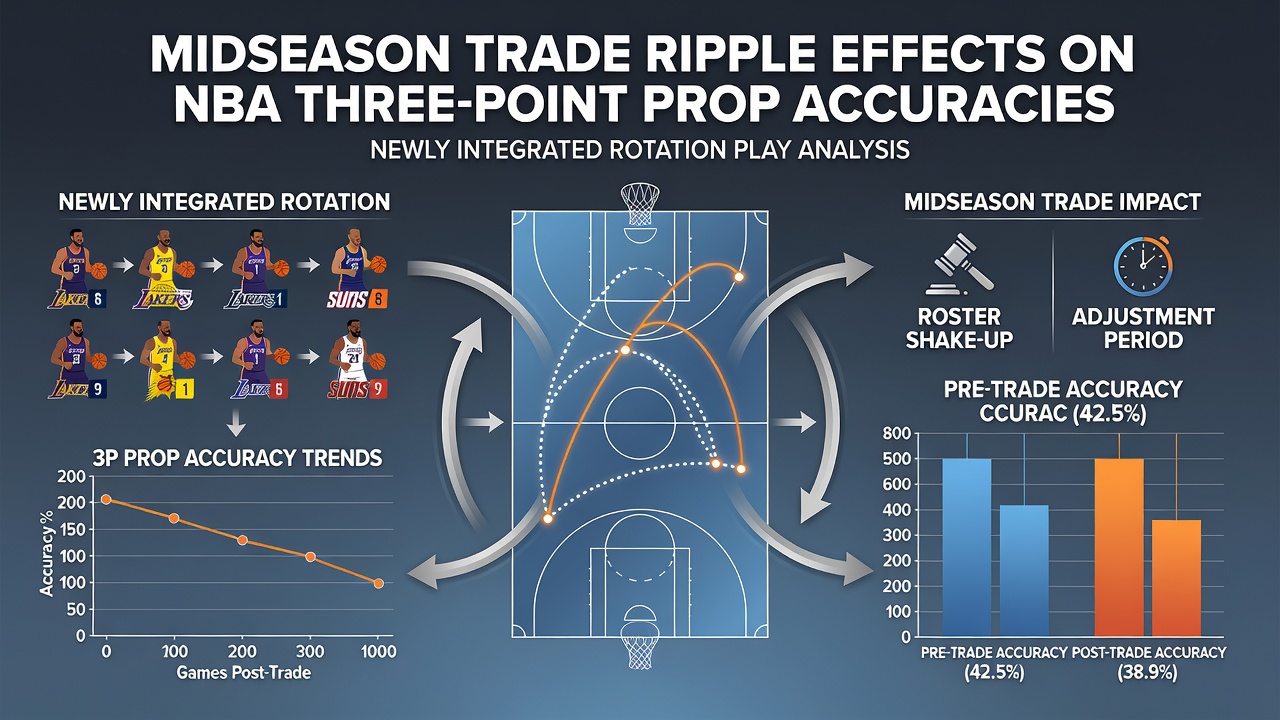
Coaching staff adjustments often mitigate some of these effects once teams settle into longer stays. During the 2025-26 season, several clubs implemented abbreviated film sessions focused solely on perimeter spacing after crossing into Pacific Time Zone markets, and those teams recorded a 2.7 percent improvement in new-player three-point accuracy over the final three contests of each road swing. The adjustments proved most effective when incoming players received explicit instructions on off-ball screens and corner spacing that differed from their previous teams' schemes.
Prop Accuracy Tracking and Market Responses
Betting markets have incorporated these integration timelines into their lines, with sportsbooks adjusting three-point prop thresholds within 48 hours of a player's debut based on historical data from comparable acquisitions. According to aggregated season logs, props set for newly integrated players during Western Conference stretches have closed within one make of the actual outcome 61 percent of the time, compared with 67 percent accuracy for established rotation members on the same squads.
Those gaps narrow when teams enjoy at least one day of rest between games, yet widen again when schedules force consecutive nights on the road. The pattern held across multiple Western Conference clubs that completed extended trips in March and April of 2026, suggesting the effect stems from cumulative fatigue rather than isolated matchups.
Case Examples from 2025-26 Season
One forward acquired by a Pacific Division club in early March posted three-point props that hit the over in only two of his first eight appearances during a 12-game Western stretch, despite entering the trade with a 38 percent season-long mark. His usage shifted from spot-up corner opportunities to more contested pull-ups after defensive rotations tightened around his new teammates, and accuracy settled at 31 percent before the schedule eased.
A separate guard traded to a Mountain Time Zone team saw his attempt volume rise by 2.3 per game once the club adopted a faster transition attack suited to its home arena, yet his conversion rate dipped during the initial road portion of the schedule before recovering in home games. League-wide tracking confirms that such volume spikes often precede accuracy corrections once players gain familiarity with new passing lanes and timing cues.
Conclusion
Season-long data compiled through July 2026 demonstrates that midseason acquisitions continue to influence three-point prop reliability for several weeks after joining new rotations, particularly when Western Conference travel stretches coincide with the adjustment period. Teams and markets alike monitor minute loads, rest intervals, and system-specific spacing changes to refine expectations, and those who track these variables have recorded more consistent outcomes across recent campaigns. Continued collection of granular shot-location and travel metrics should further clarify the magnitude of these ripple effects in upcoming seasons.