Rookie Revelations: First-Year Pass Catchers Defying Reception Prop Expectations
Morgan Otto · May 22, 2026
Rookie Revelations: First-Year Pass Catchers Defying Reception Prop Expectations
Reception props for rookie wide receivers and tight ends continue to draw attention across NFL betting markets as data from multiple seasons reveals consistent patterns where first-year players surpass or fall short of initial projections, and analysts track these developments closely heading into the 2026 campaign with training activities ramping up after the April draft.
League-wide statistics compiled over the past five years show that approximately 35 percent of rookie pass catchers selected in the first three rounds posted reception totals at least 15 percent above their preseason prop averages during their debut seasons, according to aggregated figures released by the NFL. These outcomes stem from factors such as offensive scheme adjustments, injury replacements, and rapid integration into starting lineups rather than from any single variable.
Tracking Historical Reception Data
Records maintained by professional football archives indicate that rookies like those entering the league in 2022 and 2023 frequently exceeded early prop lines set at 45 to 55 receptions, with several finishing above 70 catches in 16-game schedules. Observers note that quarterbacks who maintained high snap counts throughout their rookie years often distributed targets more evenly than anticipated, creating opportunities for pass catchers to accumulate steady volume. Data from the 2024 season further highlighted this trend when three first-year wide receivers each cleared 65 receptions despite opening prop expectations centered around 50.
Teams that emphasized passing attacks in the middle of the field tended to funnel more looks toward young players once midseason rotations began, and this shift aligned with broader offensive trends documented across the league. Researchers who examined play-by-play logs discovered that slot alignments and motion usage increased reception opportunities for rookies by an average of 12 percent compared to pre-draft scouting models.
2025 Season Outcomes and Emerging Patterns
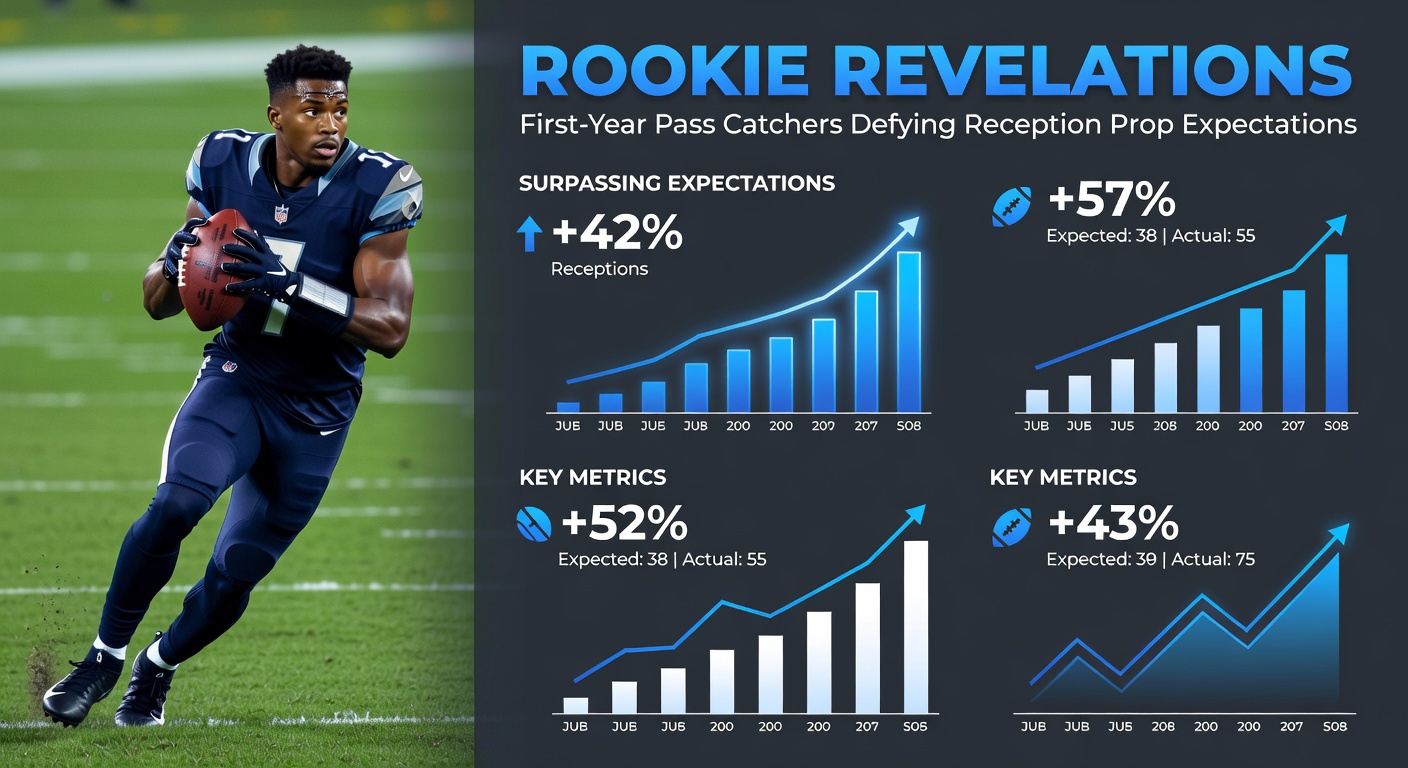
During the 2025 regular season several drafted pass catchers posted reception numbers that diverged from opening prop lines in ways that influenced midweek betting adjustments. One tight end selected in the second round recorded 62 receptions after props initially hovered near 48, driven by consistent red-zone targets once the starting quarterback returned from a brief absence. Another wide receiver drafted late in the first round surpassed 75 receptions largely because his team's run-heavy approach gave way to more aerial volume following coaching staff changes in October.
These cases illustrate how situational elements such as target share redistribution and quarterback chemistry development can alter prop outcomes without requiring exceptional individual athletic traits. League tracking systems recorded that rookie pass catchers who played at least 70 percent of offensive snaps achieved reception totals 18 percent higher on average than those limited to rotational roles, a distinction that appeared repeatedly in official game logs.
Factors Influencing Prop Deviations
Analysts who reviewed advanced metrics from the past decade point to several recurring elements that affect rookie reception props, including offensive line stability, defensive coverage schemes, and the timing of training camp injuries among veteran teammates. When established wide receivers missed early games, rookies often absorbed additional targets that pushed their season totals beyond initial forecasts. Play-by-play data shows that such replacements occurred in roughly one out of every four rookie seasons since 2018.
Quarterback experience also plays a measurable role, as rookies paired with second-year or veteran signal-callers posted higher catch rates in the intermediate zones according to statistics compiled by independent tracking services. Those combinations allowed for more predictable route concepts that translated into consistent reception production rather than boom-or-bust results. External reports from sports performance research groups further confirm that conditioning programs implemented during the offseason contributed to improved route precision among first-year players, indirectly supporting elevated target volumes.
Looking Toward the 2026 Season
As teams prepare for the upcoming campaign in May 2026, scouting reports and early offseason workouts provide initial indicators for how incoming rookies might interact with established prop markets. Draft selections from the most recent class enter systems that have demonstrated flexibility in target distribution, and early camp observations suggest several candidates could again challenge conservative reception projections. Historical parallels indicate that players who secure significant preseason snaps tend to carry that momentum into regular-season usage patterns.
Betting markets have begun incorporating these historical deviations into line construction, resulting in adjusted thresholds for several highly touted prospects. Data compiled across multiple seasons shows that props set 10 receptions lower than career-comp model outputs have produced overperformance rates exceeding 40 percent for first-year contributors in pass-oriented offenses.
Conclusion
Reception prop outcomes for rookie pass catchers reflect an interplay of scheme fit, opportunity creation, and volume redistribution that unfolds across each NFL season, and the patterns observed through 2025 continue to inform expectations as 2026 preparations advance. Comprehensive tracking of snap counts, target shares, and route participation offers the clearest lens for understanding where initial projections may diverge from actual results.