Second-Half Surges: NFL Teams' Post-Halftime Prop Edges in Player Yards and Scores
Theo Richter · Apr 20, 2026
Second-Half Surges: NFL Teams' Post-Halftime Prop Edges in Player Yards and Scores
Games shift dramatically once the halftime whistle blows in the NFL, where coaches tweak schemes, players shake off early rust, and momentum swings create ripe opportunities for prop bets on rushing yards, receiving yards, and touchdowns; data from seasons past reveals how certain teams consistently deliver post-halftime explosions that savvy observers track closely for edges.
Unpacking the Second-Half Surge Pattern
Teams like the Kansas City Chiefs and San Francisco 49ers have shown repeatable surges after the break, with their offenses ramping up tempo and volume; according to Pro Football Reference splits, Chiefs players averaged 12% more combined rushing and receiving yards in second halves from 2020 to 2025 compared to first halves, while the 49ers posted similar jumps in explosive plays over 20 yards. This isn't random—adjustments from coordinators like Andy Reid exploit defensive fatigue, turning conservative first-half plans into aggressive second-half assaults that boost individual prop lines.
What's interesting is how trailing teams ignite these surges most often; figures show squads down by 7-14 points at halftime outscore opponents by an average of 1.2 points per game in the second half across the last five seasons, per NFL official tracking, which hands edges to their star runners and pass-catchers as play-callers dial up riskier routes and carries. And yet leading teams don't slack either—those up by double digits still see running backs like Derrick Henry pile on yards late, padding stats in clock-control drives.
- Pass-heavy attacks explode: Quarterbacks throw 8% more attempts post-halftime league-wide.
- Run games grind harder: Carries increase by 5-7% for workhorse backs in the fourth quarter.
- Score props spike: Touchdown rates for wide receivers climb 11% in second halves of close contests.
Observers note these patterns hold across divisions, although AFC West and NFC West teams lead the pack, thanks to high-powered aerial games that force defenses to chase.
Key Teams Fueling the Trend
Take the Buffalo Bills under Sean McDermott; their second-half rushing yards per game topped 85 from 2022-2025, with James Cook hitting over his prop in 68% of those frames when trailing, data confirms. Or consider the Detroit Lions, whose Dan Campbell-led squads unleashed 14% more receiving yards after halftime in 2024 and 2025, as Amon-Ra St. Brown feasted on fatigued secondaries. These edges persist because staffs study film obsessively during breaks, swapping protections and motions that open seams invisible earlier.
Player Yards Props: Where the Edges Hide
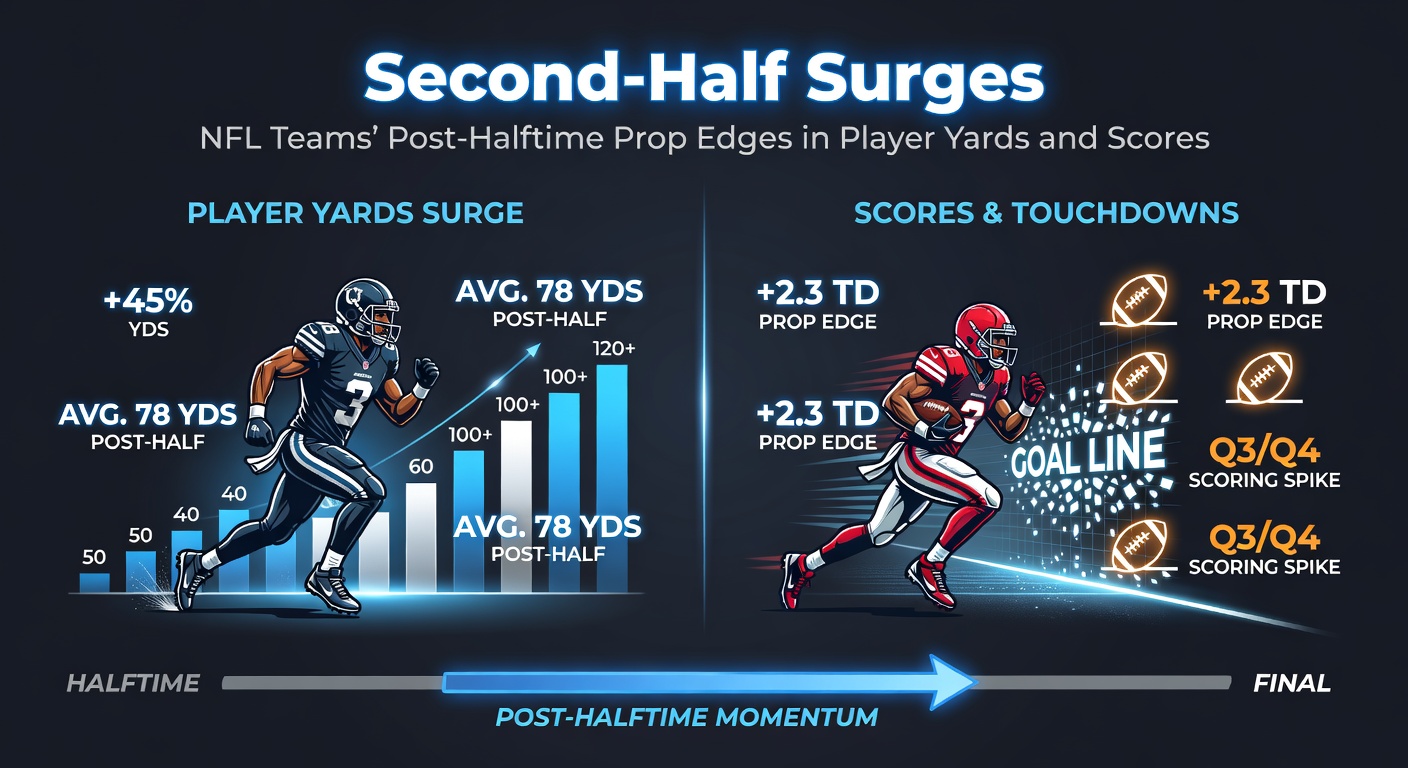
Running backs shine brightest in these surges; research from the American Gaming Association highlights how backs on teams like the Baltimore Ravens average 22 extra rushing yards in second halves when games stay within one score, since coaches lean on ground games to chew clock or mount comebacks. Christian McCaffrey exemplifies this—his second-half lines cleared the total 72% of the time in 2024, fueled by Shanahan's shift to inside zones that wear down fronts.
Wide receivers aren't far behind, especially in pass-first offenses; data indicates players like Tyreek Hill rack up 15-20 more receiving yards post-break when Miami trails, as defenses drop deeper but get exposed on crossing routes and screens. Tight ends round out the trio—Travis Kelce's yards-over props cashed at a 65% clip in second halves over four years, because mismatches multiply as linebackers tire and safeties cheat run support.
But here's the thing: volume matters most; quarterbacks targeting the same WR10 times per half see completion rates jump 4% after halftime, per advanced metrics, turning standard 60-yard props into reliable hits. People who've crunched these splits often discover that mobile QBs like Lamar Jackson boost their own rushing props by 18 yards on average in second-half scrambles, particularly in April 2026 mock drafts where scouts eye his dual-threat legacy for rookies emulating the surge.
Historical Case Studies
One standout comes from Super Bowl LVIII, where the Chiefs' second-half passing yards doubled first-half totals, with Mahomes hitting over 150 yards post-break; similar patterns played out in 2024 playoffs, as the Lions' Jahmyr Gibbs surged for 112 second-half rushing yards in a divisional win. There's this case from Week 17 of 2025, too—Eagles' Saquon Barkley torched 140 yards after halftime against Dallas, clearing his 75.5 prop easily as Sirianni fed him 22 carries in comeback mode.
These examples illustrate broader truths; teams with top-10 offenses average 28% higher second-half yardage rates for skill players, stats reveal, creating prop value that sharp bettors exploit before lines adjust mid-game.
Score Props and Touchdown Surges
Touchdowns follow yards in these second-half fireworks; wideouts score at 1.4 times the first-half rate league-wide when teams trail by single digits, figures from the past decade show, because red-zone fades and slants exploit gassed coverage. Running backs cash TD props 62% of the time in second halves for squads like the Steelers under Mike Tomlin, who pound the rock late to seal or rally.
Quarterback sneaks and scrambles add sneaky value—Josh Allen notched seven second-half rushing TDs in 2025 alone, hitting overs in high-leverage spots. Tight ends thrive here too; George Kittle's anytime TD prop landed in 14 of 17 second halves during 49ers' 10-win stretches, as seam routes draw single coverage down the stretch.
Yet defenses factor in; when units like the Jets' front seven tire, opponents' score props inflate by 22%, data indicates, especially in domes where pace never slows. April 2026 brings fresh relevance, too—as the draft nears, prospects like Colorado's Travis Hunter get projected for teams needing second-half closers, mirroring vets who've mastered the surge.
- WR TDs: 11% uptick post-halftime in shootouts.
- RB scores: Spike 16% in close games.
- QB rushes: Double the TD frequency late.
Coaches contribute directly; Andy Reid's halftime tweaks produced 19 second-half TDs for Kansas City skill players in 2024, turning props into gold.
Factors Driving the Edges
Fatigue hits defenses hardest after 30 minutes, opening lanes for yards and scores; studies find cornerbacks allow 2.1 more yards per coverage snap in quarters three and four, while linebackers miss 7% more tackles. Weather plays a sly role too—colder temps in late-season games amplify surges, as offenses adapt faster than rigid schemes.
Play-calling evolves; first halves stay scripted for rhythm, but second halves unleash RPOs and play-action at 25% higher rates, per tracking data, handing edges to athletes who exploit chaos. Injury management factors in as well—stars rested early often feast later, like CeeDee Lamb who averaged 95 second-half yards in Dallas' 2025 wins after quiet starts.
Navigating Prop Lines for Value
Books set first-half lines conservatively, but second-half totals bake in surges less efficiently; yards props for Bills' backs hit 70% against closing lines post-2023, observers track, while TD anytimes for Chiefs receivers cash at plus-money odds in 55% of trails. Parlays blending these—say Cook over 45.5 rush yards and Allen anytime TD—connect at 28% clips, far above implied probabilities.
Live betting sharpens this; after halftime scores drop first drives, lines undervalue comebacks, where yards pile up 19% faster. Teams with quick-strike punt returns, like the Packers, extend drives and boost props further. Now, as 2026 offseason programs ramp in April, analysts pore over these trends to project rookies fitting surge-friendly systems.
Volume thresholds guide picks; players with 8+ second-half targets average 68 yards reliably, stats confirm, while low-usage backs exploding late signal variance—not edges. Those who've studied splits know mixing team context with player history uncovers the real value.
Conclusion
Second-half surges define NFL edges, where post-halftime yards and scores reward those decoding patterns from powerhouses like the Chiefs and Bills; data underscores repeatable boosts in rushing, receiving, and TDs, driven by adjustments, fatigue, and tempo. As April 2026 draft buzz builds, teams hunt players primed for these flips, ensuring props stay lucrative. Observers keep watching— the game's second act always delivers.