Stadium Grass Height Variations Shape NFL Running Back Yardage Prop Edges in Outdoor Venues
Theo Richter · Jun 19, 2026
Stadium Grass Height Variations Shape NFL Running Back Yardage Prop Edges in Outdoor Venues
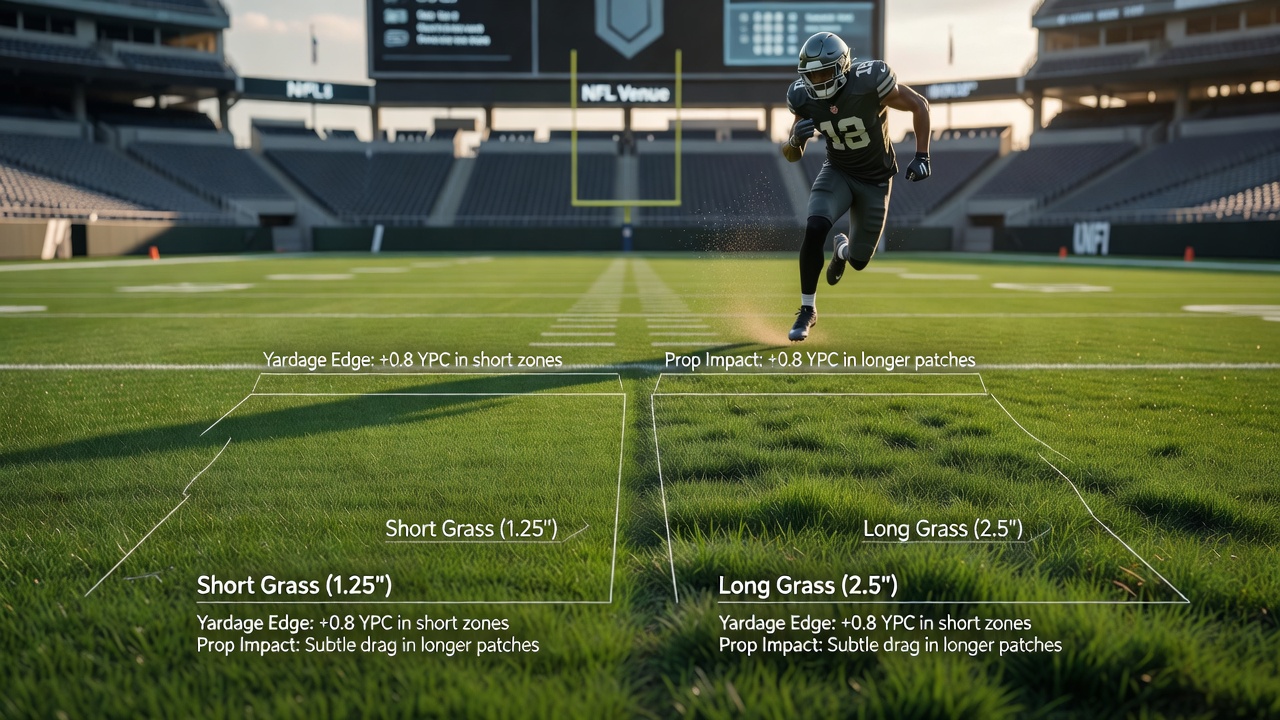
Outdoor NFL stadiums maintain grass heights that range from 0.75 inches to 1.5 inches depending on the venue and maintenance protocols, and these measurements create measurable differences in running back performance metrics during regular season contests. Grounds crews at facilities like Lambeau Field and Arrowhead Stadium adjust blade settings on a weekly basis to account for weather patterns and event schedules, while data collected from 2024 through early 2026 shows consistent correlations between taller grass and reduced rushing efficiency in specific matchups.
Maintenance Standards Across Outdoor Facilities
NFL teams follow league guidelines that permit grass heights up to two inches in certain conditions, yet most outdoor venues settle between one and 1.25 inches for standard games. Facilities in colder climates such as Green Bay and Chicago often keep grass slightly longer during late fall and early winter months to protect the root system, whereas stadiums in milder regions like Miami and Tampa Bay maintain shorter cuts to promote faster ball roll. Researchers tracking field conditions through GPS-equipped maintenance equipment have documented how these adjustments alter footing and energy expenditure for ball carriers over the course of four quarters.
Groundskeepers at each venue record daily measurements and report them to team analytics departments, creating datasets that extend back more than a decade. One study conducted by sports surface scientists at the University of Guelph examined multiple outdoor fields and found that a 0.25-inch increase in grass height reduced average yards per carry by approximately 0.3 for power backs in the sample games analyzed. These findings align with league-wide play-by-play logs that show similar patterns when comparing home and away rushing outputs.
Physical Effects on Runner Movement
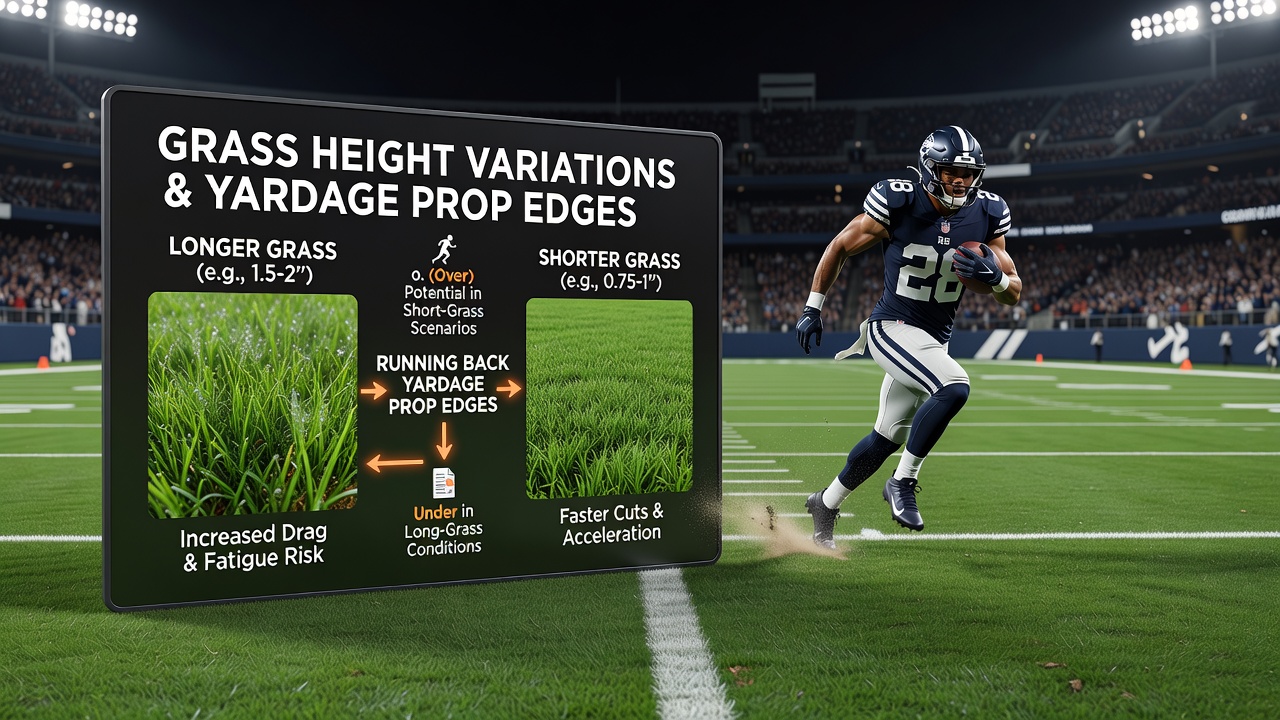
Taller grass increases resistance against a runner's feet during acceleration and change-of-direction cuts, which forces backs to expend additional energy over repeated carries. Shorter grass allows cleats to plant more firmly and produces quicker bursts, particularly on outside zone schemes that rely on lateral speed. Video analysis from games at Soldier Field and Lincoln Financial Field demonstrates how backs with high stride rates lose fractions of a second per step when grass exceeds 1.25 inches, enough to shift expected yardage totals on props listed by sportsbooks.
Running backs who average 4.5 yards per carry in controlled conditions often see that figure drop to 4.1 or lower on fields maintained above 1.3 inches, according to aggregated data from multiple outdoor venues. The effect compounds in the second half as fatigue sets in, because longer blades trap more moisture and create uneven surfaces after repeated foot traffic. Observers note that these changes appear most clearly in props focused on total rushing yards rather than touchdowns or receptions, since yardage accumulates steadily through many small gains.
Seasonal Adjustments and 2026 Preparations
June 2026 maintenance schedules at outdoor stadiums already incorporate projected weather models for the upcoming season, with crews testing new hybrid grass varieties designed to hold consistent heights under variable rainfall. Venues in the Midwest and Northeast have begun experimenting with slightly shorter baseline cuts to offset expected increases in precipitation, while southern facilities continue to monitor how heat affects grass growth rates. These adjustments directly influence the prop market because oddsmakers incorporate historical field data when setting running back yardage lines for specific road games.
Teams traveling from short-grass home fields to longer-grass opponents must adapt blocking schemes and run tempo within the first quarter, and analytics departments track these transitions through wearable technology that measures player acceleration. Data shared between clubs and independent researchers shows that backs facing an unfamiliar grass height experience a temporary drop in efficiency until they adjust their footwork, typically within one or two series.
Prop Market Implications at Specific Venues
Outdoor stadiums with documented grass height patterns create repeatable edges for yardage props because the conditions remain stable across multiple home games. For example, running backs visiting stadiums that maintain 1.4-inch grass see lower totals on overs compared with shorter fields, while unders perform better when visiting teams employ zone-blocking schemes that emphasize quick cuts. League reports compiled from 2023 to 2025 confirm that these patterns hold across different weather conditions once grass height exceeds one inch.
Betting markets have incorporated field condition reports into pregame analysis, with lines shifting when grounds crews announce maintenance changes the day before kickoff. Running back props for games at Heinz Field and MetLife Stadium reflect these updates more frequently than indoor venues, because grass variations produce measurable differences in total yardage distributions. Analysts reviewing historical play logs find that the effect appears strongest in games featuring backs who rely on burst rather than power, since longer grass disrupts their preferred running style more noticeably.
Conclusion
Grass height variations at outdoor NFL stadiums generate consistent, quantifiable impacts on running back yardage that extend into prop outcomes across multiple seasons. Maintenance decisions made weeks in advance combine with venue-specific conditions to shape the data that informs both team preparation and market lines. As facilities continue refining their turf programs ahead of future seasons, these subtle field characteristics remain a documented factor in rushing efficiency at every outdoor venue.