Staff Shakeups Reshaping NFL Quarterback Completion Prop Dynamics
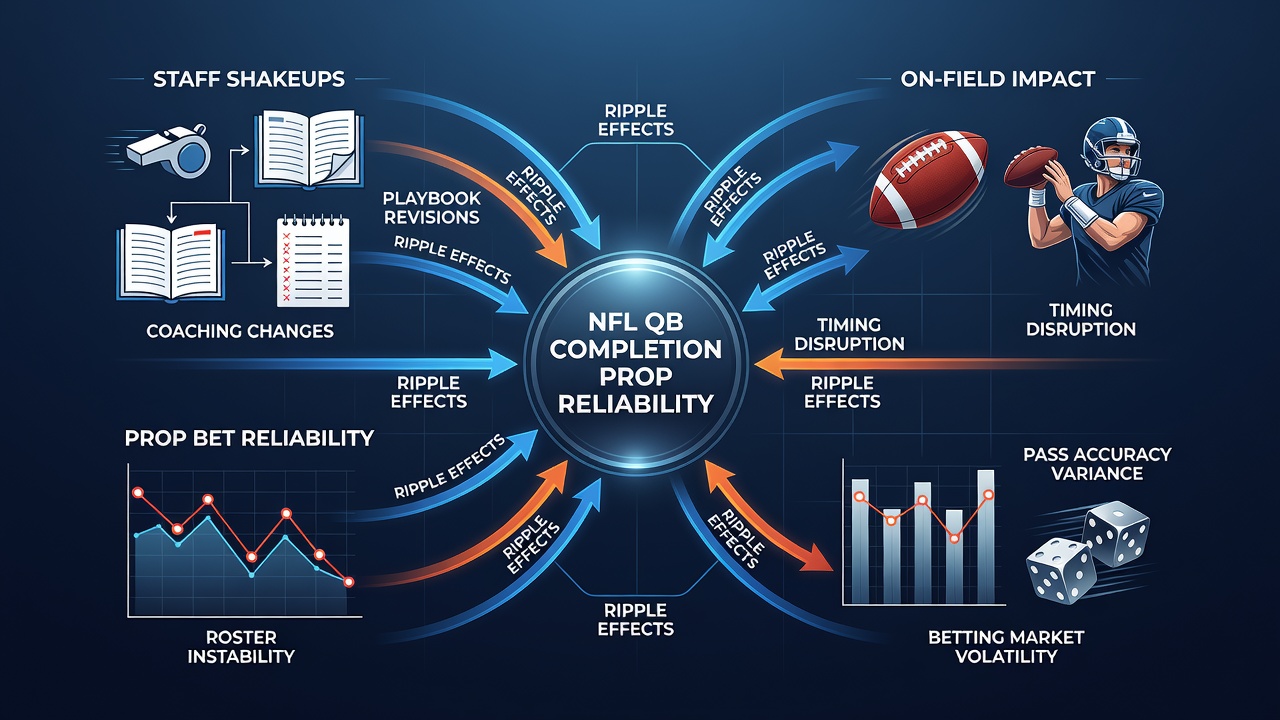
Coaching transitions and front office adjustments occur regularly across NFL franchises, and these changes carry measurable consequences for quarterback completion percentages that feed directly into prop betting markets. Teams that alter their offensive coordinators or quarterbacks coaches often see shifts in passing schemes that affect short, intermediate, and deep ball accuracy rates. Data compiled over multiple seasons shows that completion prop reliability fluctuates when new play-calling philosophies replace established systems, because quarterbacks must adapt timing, footwork, and receiver route adjustments under fresh instruction.
Front Office adn Coaching Transitions
Front office personnel moves frequently precede on-field staff shakeups, and observers note that general manager changes tend to accelerate head coach or coordinator replacements during the offseason. In July 2026 several organizations completed their hiring cycles earlier than in prior years, allowing new staffs more time to install terminology and concepts before training camp. Those adjustments influence how quarterbacks distribute the ball, which in turn alters the statistical baselines used by sportsbooks when setting completion props. Research from university sports analytics programs indicates that teams installing entirely new offensive systems experience an average drop in completion percentage during the first four to six weeks of the regular season as players internalize revised progressions.
Historical Patterns in Completion Rate Shifts
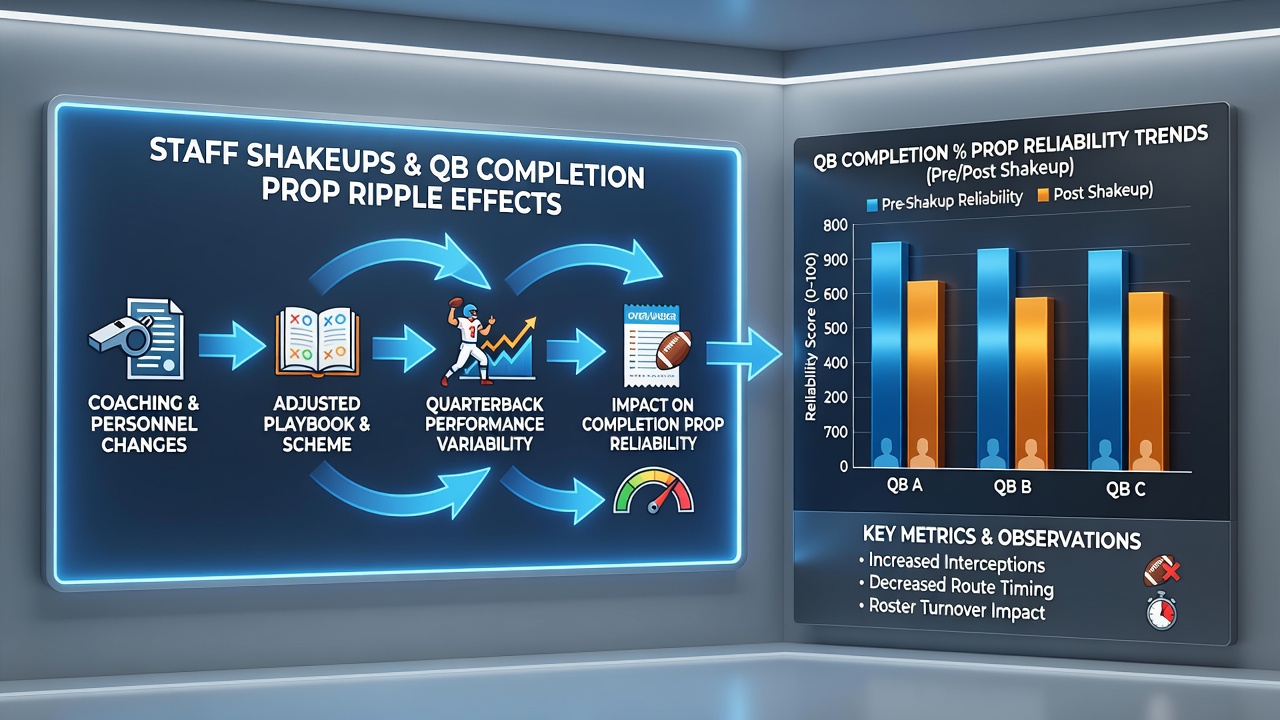
League-wide figures reveal that quarterback completion rates move in predictable directions following coordinator changes. When a team replaces a West Coast-style offense with a vertical or spread-based attack, short-pass volume often decreases while deeper targets increase, producing lower overall completion marks. Conversely, the adoption of quicker rhythm schemes tends to elevate completion percentages because the ball leaves the quarterback's hand faster and with less defensive pressure. Prop markets adjust these expectations, yet initial lines sometimes lag behind the actual transition effects until several weeks of data accumulate. One study tracking thirty-two team seasons found that completion props settled into more stable ranges after week seven once new coaching influences became fully integrated.
Impact on Prop Market Reliability
Betting markets rely on historical completion data to establish prop lines, yet staff shakeups introduce variables that reduce the predictive power of those baselines. Sportsbooks respond by widening margins or delaying line releases until training camp and preseason performances provide clearer signals. Analysts tracking these patterns observe that props involving veteran quarterbacks under new coordinators carry wider variance bands than those attached to unchanged staffs. Completion prop reliability improves once teams demonstrate consistent usage patterns in live game action, but early-season lines often reflect uncertainty around scheme fit rather than pure talent metrics.
Receiver Group Adjustments and Route Timing
Staff changes rarely affect only the quarterback; receiver coaches and position groups also receive new instructions that alter release timing and route stems. These modifications directly influence how cleanly passes arrive at their targets, which affects completion percentages. Data from multiple seasons demonstrates that receiver corps adapting to revised concepts post-coordinator change post lower yards-after-catch numbers in the opening month, further depressing completion rates on intermediate routes. Prop bettors who monitor individual receiver usage reports during camp gain insight into how these collective adjustments will manifest in game statistics.
Preseason Indicators and Line Movement
Preseason snaps supply early evidence of scheme implementation, and completion percentages recorded during those contests often preview regular-season trends. Teams that post unusually low or high completion figures in exhibition games frequently see corresponding adjustments in regular-season prop lines once the new staff's tendencies become public. Industry reports from sports data providers show that sharp bettors who isolate completion props tied to recently hired coordinators achieve better long-term results by waiting for the first three regular-season games before committing large positions. That delay allows actual performance data to replace preseason speculation.
Conclusion
Staff shakeups continue to introduce measurable variance into NFL quarterback completion statistics that underpin prop reliability. Front office timelines, scheme installations, and receiver adjustments each contribute to the statistical shifts that sportsbooks must account for when setting lines. Observers tracking these dynamics note that completion prop stability returns gradually as new systems take hold, usually by midseason. External resources such as Pro Football Reference historical datasets and reports from the International Society of Sports Sciences provide additional context for understanding how personnel transitions reshape passing outcomes year after year.