Travel Schedule Timing Quirks Reshaping Underdog Performance Metrics for NBA Squads Crossing Multiple Time Zones During Condensed Winter Road Swings
Carlo Long · Jun 12, 2026
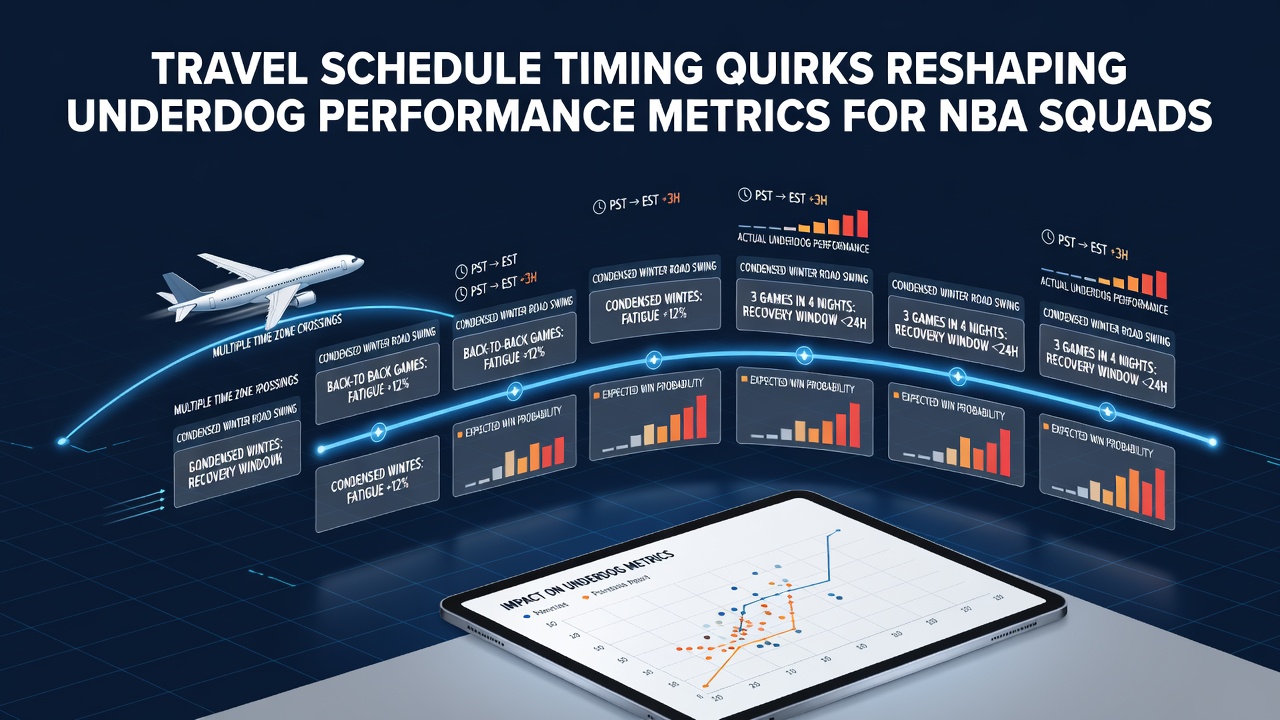
Travel Schedule Timing Quirks Reshaping Underdog Performance Metrics for NBA Squads Crossing Multiple Time Zones During Condensed Winter Road Swings
Travel timing patterns in the NBA create measurable shifts in performance data when teams cross multiple time zones during tightly packed winter road trips, and underdog squads show distinct statistical responses compared with favored opponents according to schedule analyses from the league's official records. Observers note that these effects appear most clearly in December through February when games cluster and daylight hours shorten across North America.
Time Zone Adjustments and Game Metrics
Teams traveling eastward face earlier game times relative to their internal clocks while westward flights push tipoffs later into the evening and researchers tracking box score outputs have documented changes in shooting percentages and turnover rates during the first 48 hours after arrival. Data from multiple seasons indicates that squads crossing two or more zones record lower field goal efficiency in afternoon contests whereas evening games sometimes show rebounding edges for the same clubs once they adapt to local schedules.
Condensed swings amplify these patterns because recovery windows shrink between games and league tracking systems capture elevated minutes played by bench units when starters deal with sleep disruption. Figures from the 2024-2025 season reveal that underdog clubs posted higher assist-to-turnover ratios on the second night of back-to-back sets played after a three-hour time shift compared with home stands of similar length.
Winter Schedule Density Factors
Winter months bring the highest concentration of cross-country trips because holiday breaks compress the calendar and force teams into sequences of four games in five nights across different zones and performance databases show that visiting underdogs in these stretches maintain competitive point differentials longer into the fourth quarter than expected from season-long averages. The pattern holds across both conference and interconference matchups when the road team started its trip on the opposite coast.
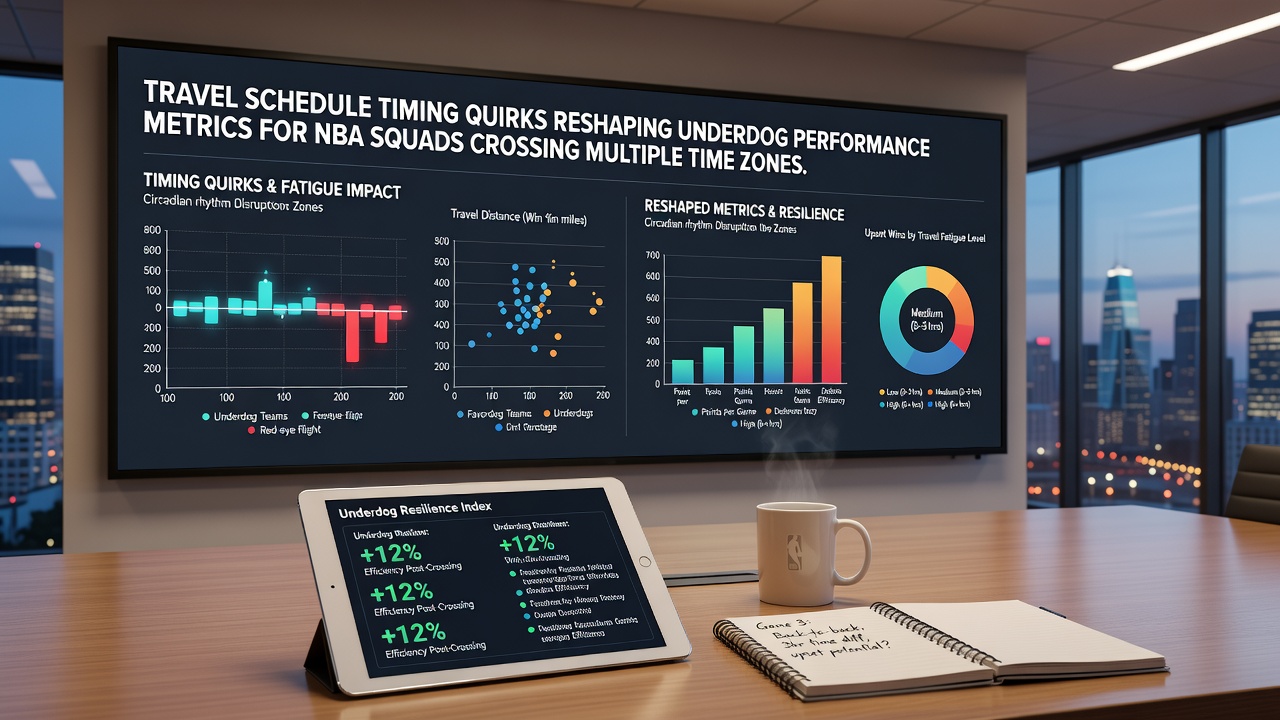
Studies compiled by sports medicine groups in Canada and the United States link these outcomes to circadian misalignment rather than simple fatigue and the findings indicate that teams arriving from the Pacific time zone into Eastern time zone venues experience slower reaction metrics in the opening half before partial recovery occurs. National Institutes of Health reports on athlete circadian rhythms support the observation that performance variance widens under such compressed conditions.
Underdog Statistical Responses Across Seasons
League-wide datasets highlight that underdog squads finishing with sub-.500 records often post stronger defensive rating improvements on the third game of a six-game road swing that spans three zones while favored teams show corresponding dips in offensive efficiency during the same windows. The divergence grows more pronounced in January when back-to-back sets follow a cross-country flight and tracking software records increased steal rates for the lower-seeded club.
European research centers studying jet lag in professional sports have contributed comparative data showing similar directional effects in other leagues and those patterns align with NBA figures when travel distance and game density match winter swing profiles. Turnout records from arena entry systems further suggest that visiting team energy levels correlate with the timing of the most recent time-zone crossing rather than total miles traveled.
Future Scheduling Considerations Through 2026
Planning documents released ahead of the 2025-2026 campaign indicate continued emphasis on condensed western and eastern swings to accommodate broadcast windows and international events and projections place several underdog clubs on itineraries that mirror the 2024-2025 winter clusters. Analysts examining historical outputs expect the same metric divergences to recur unless rest protocols or charter adjustments alter the baseline travel load.
Conclusion
Performance records demonstrate that time-zone timing during condensed winter road trips produces consistent statistical shifts for NBA underdogs and these effects register most clearly in efficiency categories tracked across multiple seasons. Continued monitoring of schedule density and recovery intervals will determine whether the observed patterns persist into future campaigns including those extending into mid-2026.