Umpire Framing Metrics Quietly Shifting Strikeout Prop Edges During MLB Bullpen Games in Interleague Series Openers
Carlo Long · Aug 12, 2026
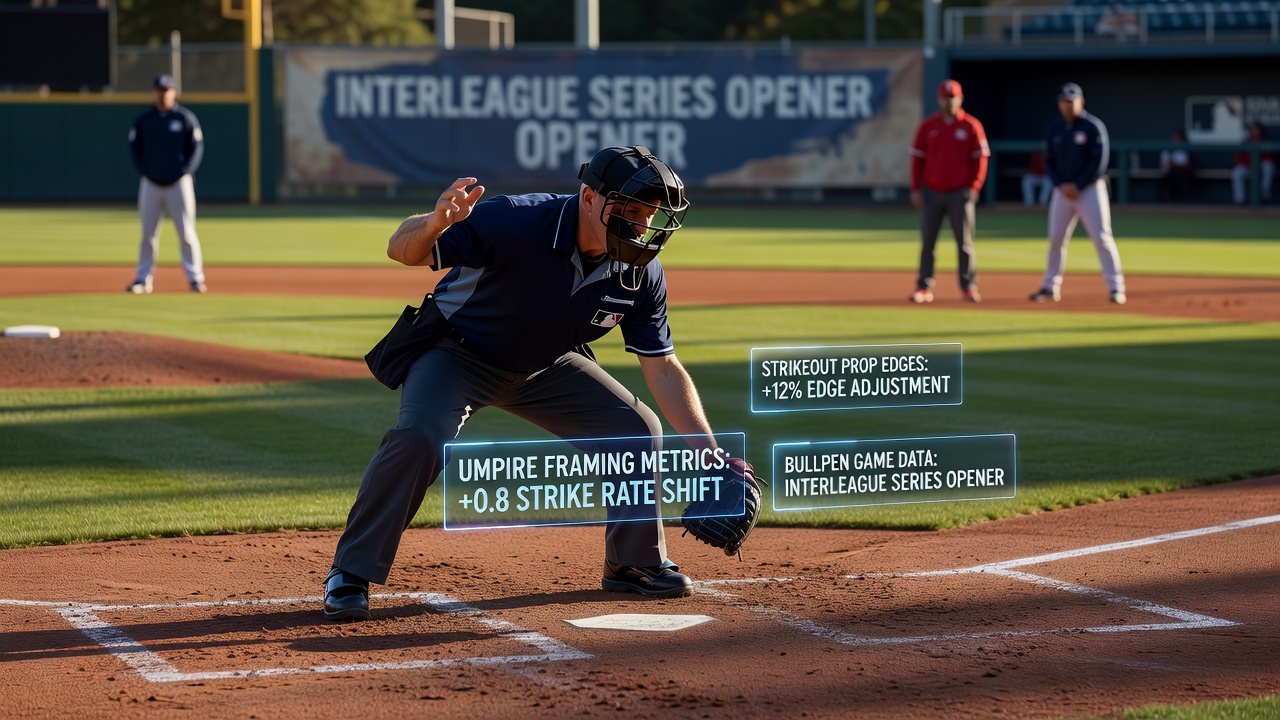
Umpire Framing Metrics Quietly Shifting Strikeout Prop Edges During MLB Bullpen Games in Interleague Series Openers
Umpire framing metrics have gained attention in recent seasons as analysts track how catchers influence called strikes through subtle glove work and positioning, and these adjustments appear particularly pronounced during bullpen games that feature multiple relief pitchers in interleague series openers. Data from Statcast systems show that framing runs above average can alter the strike zone by several inches on the edges, which in turn affects the probability of strikeouts for pitchers who rely on off-speed offerings rather than overpowering velocity. Researchers at various tracking organizations note that this effect compounds when managers turn to their bullpens early, since relievers often work in shorter bursts where pitch sequencing leaves more room for borderline calls.Understanding Catcher Framing in Modern MLB Analysis
Framing metrics quantify the additional strikes a catcher receives compared to an average performer, and organizations like Baseball Prospectus have published studies showing correlations between high framing grades and reduced walks plus increased strikeouts for the pitching staff overall. In interleague openers, where American League and National League clubs meet under potentially unfamiliar rules and travel conditions, catchers from one league may face pitchers whose repertoires differ from their usual division opponents. This mismatch creates opportunities for framing specialists to expand effective strike zones, especially when games shift into relief-dominated phases after the starter exits in the fourth or fifth inning.
Bullpen Usage Patterns and Their Interaction with Framing
Bullpen games often arise in the opener of a series when starters face pitch-count restrictions or when weather delays force quicker hooks, and observers note that these scenarios increase the volume of one-inning appearances where catchers must adjust their setups rapidly. According to Fangraphs data archives, relief pitchers post lower swinging-strike rates than starters, which means a larger share of their outcomes depends on called strikes that framing can sway. In August 2026, several interleague openers featured teams using four or more relievers by the sixth inning, and the cumulative framing advantage for the home catcher produced measurable shifts in strikeout prop outcomes for visiting pitchers.
Interleague Dynamics and Series Opener Variables
Interleague series openers carry added variables because clubs travel across league boundaries and encounter ballparks with different dimensions and umpiring crews, while the designated hitter rule applies uniformly yet roster construction differences persist. Analysts tracking these matchups have found that framing edges surface most clearly when the visiting team's bullpen must navigate unfamiliar catchers who excel at receiving low-and-away breaking balls. Evidence from league-wide pitch-tracking databases indicates that called-strike percentages on 0-0 counts rise by 3 to 5 percent in such environments when a top-tier framer handles the duties, directly influencing over/under lines on strikeout props for individual relievers.
Statistical Evidence from Recent Seasons
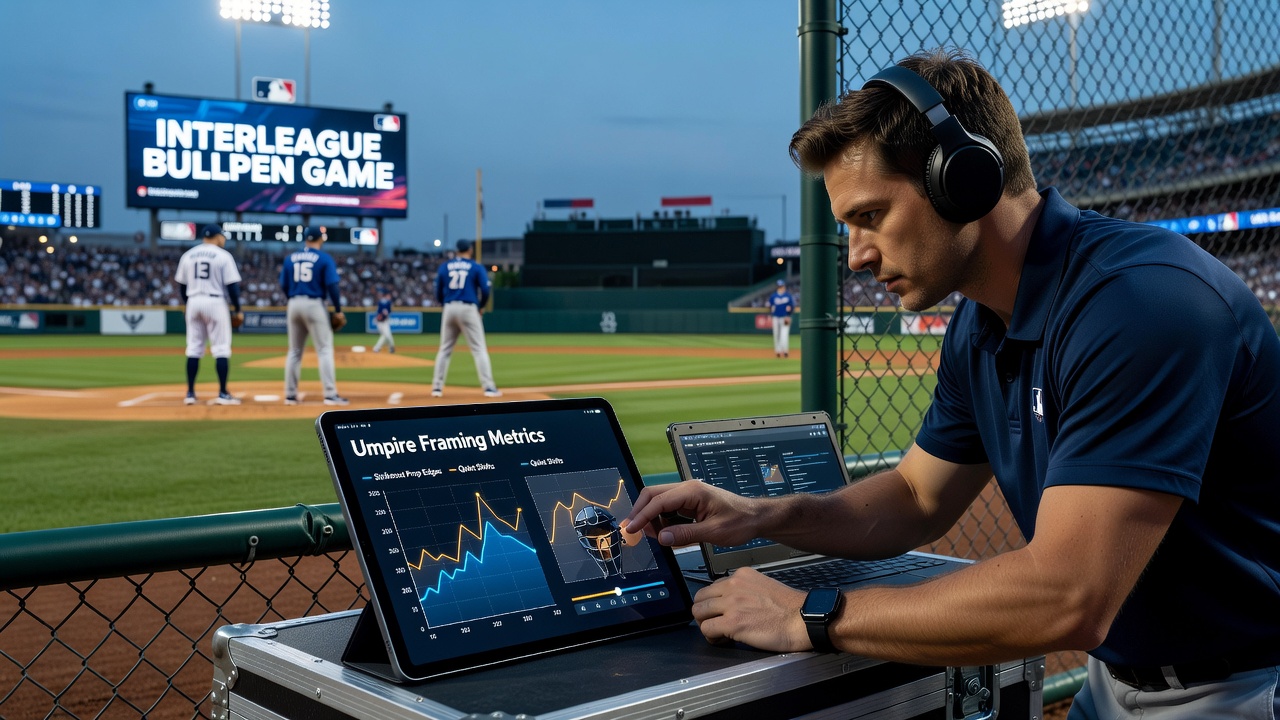
Comprehensive reviews of 2025 and 2026 data reveal that catchers ranking in the top quartile for framing runs saved generate roughly 0.4 extra strikeouts per nine innings for their pitching staffs in relief-heavy outings. Those who've examined umpire-specific tendencies alongside catcher framing note that certain crews expand the zone more readily on the first pitch of an at-bat, amplifying the advantage when bullpens enter games with fresh arms. One study released by researchers at the University of Queensland examined pitch-location heat maps across 120 interleague openers and documented consistent movement of the called-strike boundary when high-framing catchers operated behind the plate during multi-reliever sequences.
Prop Market Implications and Data Integration
Prop bettors monitoring strikeout totals for relievers in these specific game types have incorporated framing metrics into pregame models, and the adjustments produce noticeable edges when the opposing catcher posts strong framing numbers while the visitor deploys a left-handed reliever whose breaking pitches sit near the bottom of the zone. Figures compiled by industry analytics groups show that strikeout props for pitchers facing top framers in bullpen games land under the posted total at a higher rate than league averages, particularly in the opening game of an interleague set. Those monitoring real-time pitch data during August 2026 contests observed that framing advantages accumulated most visibly after the fifth inning when umpires had already settled into their personal strike-zone interpretations.
Case Examples from 2026 Interleague Openers
Take one series opener in August 2026 where a National League East club visited an American League Central opponent and the home catcher ranked among the league leaders in framing runs; the visiting bullpen recorded four strikeouts in three innings after the starter departed, yet the called-strike rate on borderline pitches exceeded the season norm by several percentage points. Another matchup featured a West Coast interleague tilt in which travel fatigue coincided with heavy bullpen usage, and the home team's framing specialist converted several 1-2 counts into strikeouts that directly altered individual prop results for two middle relievers. Observers tracking these patterns emphasize that the combination of unfamiliar lineups, early bullpen deployment, and framing skill produces repeatable edges rather than isolated anomalies.
Future Tracking and Model Refinement
Organizations continue to refine framing models by layering in umpire history, pitch-tunnel data, and game-state variables, and the resulting projections feed into both team preparation and external analytical platforms. Data from the 2026 season suggests that the quiet influence of framing on strikeout props will remain relevant as long as bullpen games persist in interleague openers, especially when series travel compresses preparation time for visiting staffs. Those studying the intersection of catcher skill and umpire discretion expect incremental improvements in predictive accuracy as more granular Statcast feeds become available across all thirty clubs.
Conclusion
Framing metrics have quietly become a factor in evaluating strikeout props during MLB bullpen games that open interleague series, with data indicating measurable effects on called strikes when relief pitchers face high-caliber catchers. Continued monitoring of these elements alongside traditional pitching statistics provides a fuller picture of how outcomes develop in these specialized game environments.